




Driveway Drainage Solutions: Keeping Water at Bay
Proper driveway drainage is vital for preserving your driveway and preventing water-related damage to your property. Standing water and inadequate drainage can cause erosion, damage to your driveway, icy patches during winter, and more. This guide will help you understand the importance of effective driveway drainage and the various solutions available.
Why Driveway Drainage Matters
Driveway drainage is crucial to avoid several problems:
- Cracks and Potholes: Water seeping into the driveway can cause cracks and potholes due to freeze-thaw cycles or material degradation.
- Erosion: Poor drainage can erode the soil beneath your driveway, leading to uneven surfaces or driveway collapse.
- Ice Formation: Accumulated water can freeze during winter, creating hazardous icy patches that increase the risk of accidents.
- Property Damage: Excessive runoff can flood adjacent landscapes, causing soil erosion and damage to plants, or even lead to flooding in your garage or basement.
Factors Affecting Driveway Drainage
Several factors influence driveway drainage, including:
Slope: A well-sloped driveway directs water away, preventing pooling.
Material: Some driveway materials, like tarmac, asphalt or concrete, are more permeable than others.
Soil Type: Well-draining soil helps absorb water, whereas clayey soil tends to hold moisture.
Surrounding Landscaping: Proper landscaping can assist or hinder driveway drainage.
Common Driveway Drainage Problems
Common driveway drainage issues include:
Low Spots: These depressions collect water, leading to pooling.
Adjacent Runoff: Water from nearby areas, like roofs or other driveways, may accumulate on your driveway.
Poor Surface Material: Inadequate materials may allow water to collect on the surface.
Drainage Solutions for Driveways
Sloping and Grading
Proper sloping and grading are key for effective driveway drainage. The driveway should have a minimum slope of 1-2%, directing water away from the house and towards a designated drainage area. If regrading is needed, consult a professional for precise slope measurements.
Channel Drains
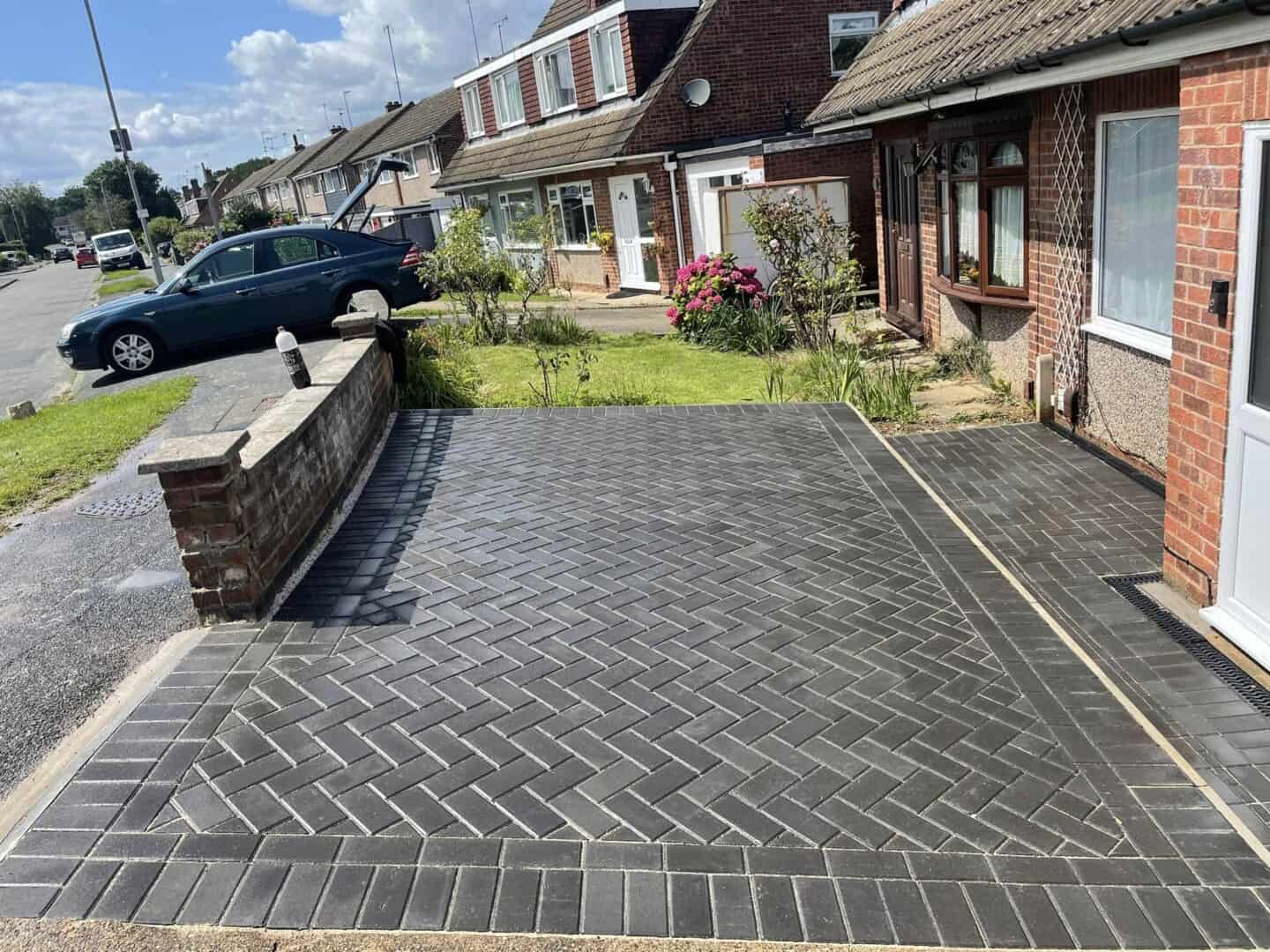
Channel drains, also known as trench drains, are installed across Driveways Loughborough to effectively capture and redirect water, preventing pooling and potential damage. They are particularly beneficial for sloping driveways or areas that experience heavy water runoff. Featuring a grated top, these drains ensure that debris is kept out, reducing the risk of clogs and maintaining a smooth drainage system for your driveway.
French Drains
French drains are an effective subsurface drainage solution for Driveways Derby, designed to divert water away from the surface. These systems consist of a trench filled with gravel and a perforated pipe that captures and channels excess water to a designated drainage point. French drains are particularly suitable for areas with persistent water accumulation, helping to prevent damage and maintain the integrity of your driveway.
Swales
Swales are shallow, grassy ditches that help divert water away from the driveway. They can be landscaped with plants or rocks for aesthetic appeal. Swales work well for large driveways or properties with ample space.
Permeable Surfaces
Permeable surfaces, such as porous asphalt or permeable pavers, are excellent choices for Driveways Hinckley as they allow water to pass through and absorb into the ground below. By reducing water accumulation and runoff, these materials help prevent flooding while promoting groundwater recharge. Opting for permeable surfaces is an eco-friendly solution, ideal for homeowners looking to incorporate sustainable and environmentally responsible options into their driveway design.
Drainage Solutions for Different Driveway Materials
The type of driveway material you have can impact your drainage solutions. Here, we’ll discuss how to address drainage issues for different materials including asphalt, concrete, pavers, and gravel driveways.
Asphalt Driveways: Asphalt driveways can be sealed with a permeable sealant to allow water to pass through. Regular sealing is necessary to maintain this permeability.
Concrete Driveways: Concrete driveways can be made with porous concrete, which lets water pass through the surface. Concrete can also be sloped and shaped to direct water.
Block Paved Driveways: Block Paved driveways can be designed with gaps between the blocks filled with sand or another permeable material, allowing water to pass through.
Gravel Driveways: Gravel driveways naturally allow water to pass through, but they can be prone to erosion. Installing a geotextile fabric beneath the gravel can help prevent this.
Costs and Benefits of Driveway Drainage Solutions
Implementing a driveway drainage solution is an investment, but one that can provide significant benefits. In this section, we’ll discuss the costs of implementing the different solutions mentioned earlier and the long-term benefits.
- Initial Costs: Depending on the solution, the initial costs can vary. For example, installing a French drain can be more expensive than simply regrading your driveway.
- Maintenance Costs: Some solutions, like permeable surfaces, may require more regular maintenance. Others, like a French drain, may require less.
- Benefits: Investing in proper driveway drainage can prevent costly damage to your property and increase the lifespan of your driveway. In addition, a well-drained driveway can enhance the aesthetic appeal of your home and increase property value.
Consulting a Professional
Driveway drainage solutions can range from simple to complex. In some cases, you may be able to implement solutions yourself, but for more complex issues, it is advisable to consult a professional.
When to Consult a Professional: If you have ongoing drainage issues, structural problems with your driveway, or if the proposed solution requires specialised equipment or expertise, it may be time to consult a professional.
What to Expect: A professional will assess your property, take measurements, and consider various factors like soil type and slope. They will then propose a tailored solution to address your specific needs.
Choosing a Contractor: When selecting a contractor, look for someone with experience in driveway installations and drainage solutions. Check reviews, ask for references, and get multiple quotes to ensure you’re getting a fair price.
Additional Considerations
Gutters and Downspouts
Properly functioning gutters and downspouts are essential for managing roof runoff. Ensure they are free of debris and direct water away from the driveway to prevent excessive accumulation.
Landscaping
Incorporate water-absorbing plants, rain gardens, or berms near the driveway to help absorb excess water and reduce runoff. Consult a professional landscaper for suitable plant recommendations.
Maintenance
Regular maintenance, including removing debris, sealing cracks, and addressing drainage issues, helps prolong your driveway’s lifespan and ensures optimal performance.
Contact Pavemaster Driveways Today
Effective driveway drainage is vital for maintaining a functional, long-lasting driveway and preventing water-related damage to your property. By implementing the solutions discussed here and consulting with professionals as needed, you can enjoy a well-drained and visually appealing driveway. The team at Pavemaster Driveways are ready and waiting to answer any questions or queries you may have about your driveway in Derby so contact us today.